
Acetic Anhydride Plant
ATTOMO provides engineering and process-equipment manufacturing within agreed turnkey or equipment-supply projects for acetic anhydride plants. The proposal is developed around the selected technology basis, capacity, product specification, materials, utilities and defined project scope.
Plant and equipment enquiries: this page covers manufacturing plants and process packages, not the supply of bulk chemicals. Engineering is included within the agreed turnkey or equipment-supply scope. Explore Greenfield EPC delivery →
Process and equipment approach
The selected technology determines the reaction, recovery and purification duties. A proposal should identify the feed, process interfaces, construction materials and required controls. Operating values and utilities must be tied to the particular production rate and conditions.
Applications and product requirements
Acetic anhydride is an acetylating intermediate with a different chemical identity and handling basis from acetic acid. The product specification should include assay and relevant water, acidity and impurity limits. Its production route and equipment duties are distinct from alcohol-based acetate ester production.
Equipment and operating approach
Industrial production can use different process routes. Reaction, recovery of usable material and product purification must be evaluated as a complete system under the selected technology. The equipment discussion can cover the specified reaction section, heat-transfer duties, absorption or condensation where required, purification columns and product receivers. ATTOMO’s actual route, technology rights and process-performance scope require explicit engineering confirmation.
Define the right package.
The quotation defines the included equipment, services and battery limits.
- Engineering and equipment design to the agreed process
- Fabrication of specified reaction and separation equipment
- Heat-transfer, receiver and storage interfaces
- Piping, instrumentation and automation as contracted
Materials and configuration
Materials, joints, seals and cleaning methods must suit the reagent and all process intermediates. Water exposure and moisture ingress need specific consideration in handling and storage design. Instruments, protective controls, vent treatment, utilities and installation boundaries must be assigned in the technical offer. Process safety review forms part of defining the plant and operating requirements.
Utilities and operation
Heating and cooling loads depend on the chosen route, recovery system and final product specification. Capacity, utility consumption and acceptance-test duration need a stated engineering basis. Feed storage, water exclusion and the selected vent-treatment arrangements should be included in the site utility and handling review.
Information for your enquiry.
Share the information you already have. Early-stage enquiries are welcome.
- Approved process basis and capacity
- Feed and product specifications
- Utility supply conditions
- Inspection, documentation and scope requirements
Frequently asked questions
How should a utility schedule be presented?
State whether a value is consumption per tonne, instantaneous demand or installed capacity. Cooling duty, circulation flow and cooling-water makeup must be listed separately with their conditions.
Are all technologies equally suitable for every project?
No. Feed availability, product requirements, plant scale, integration and operating constraints must be reviewed before a route is selected.
Are acetic acid and acetic anhydride interchangeable products?
No. They are different compounds with different specifications and process duties. The product, feed and handling requirements must be identified correctly.
Does ATTOMO’s equipment scope include process licensing?
Only if expressly included in the agreement. Identify the technology provider, design authority and responsibilities for catalysts, guarantees and operating documentation.
Why are moisture and storage interfaces important?
Acetic anhydride reacts with water. Material handling, storage, venting and cleaning must follow the approved chemical and process safety basis.
Related solutions
Acetic anhydride, acid recovery and tank-farm installation
A photographic overview of the process structures, equipment arrangement and storage area from ATTOMO’s project collection.
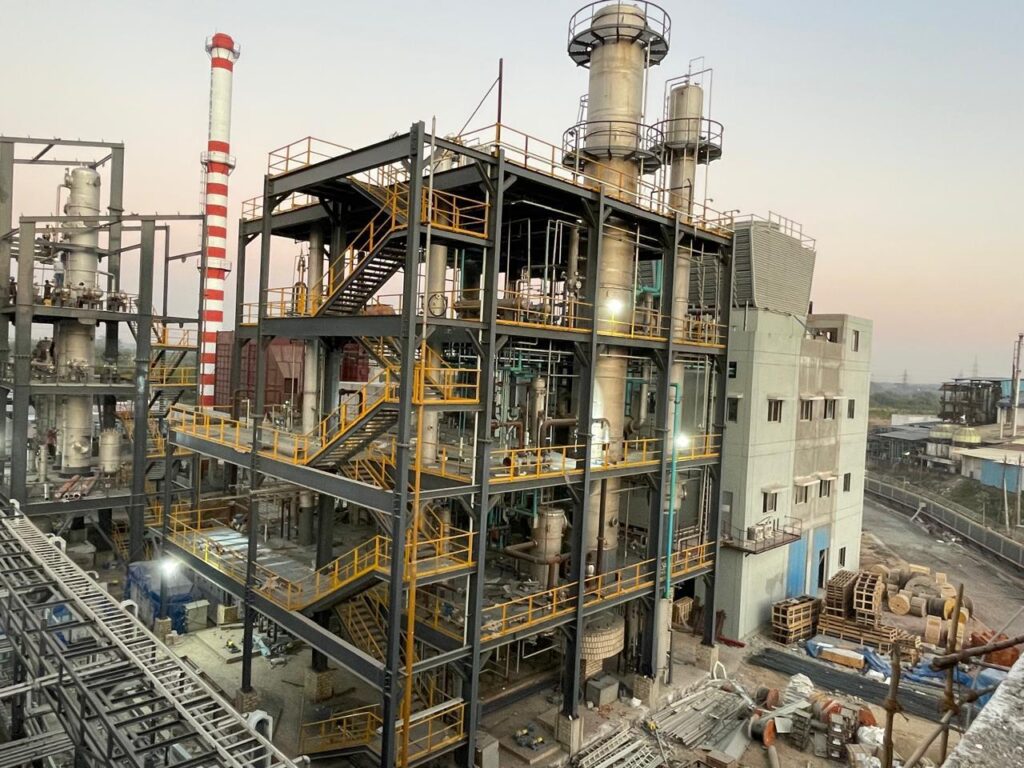
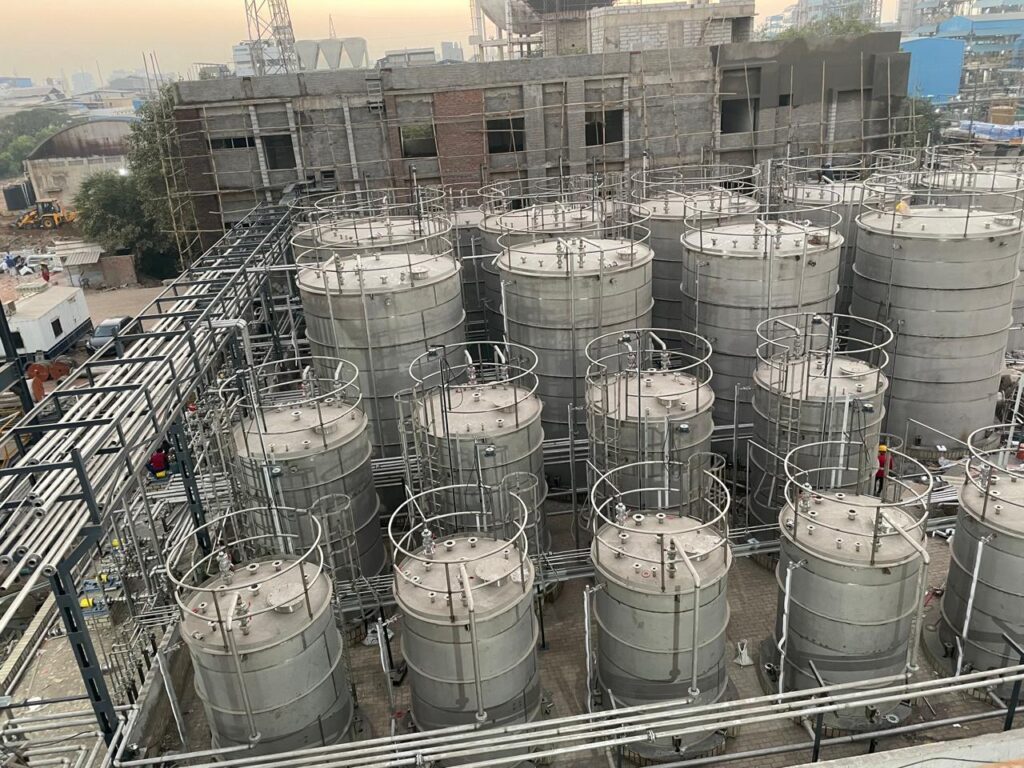
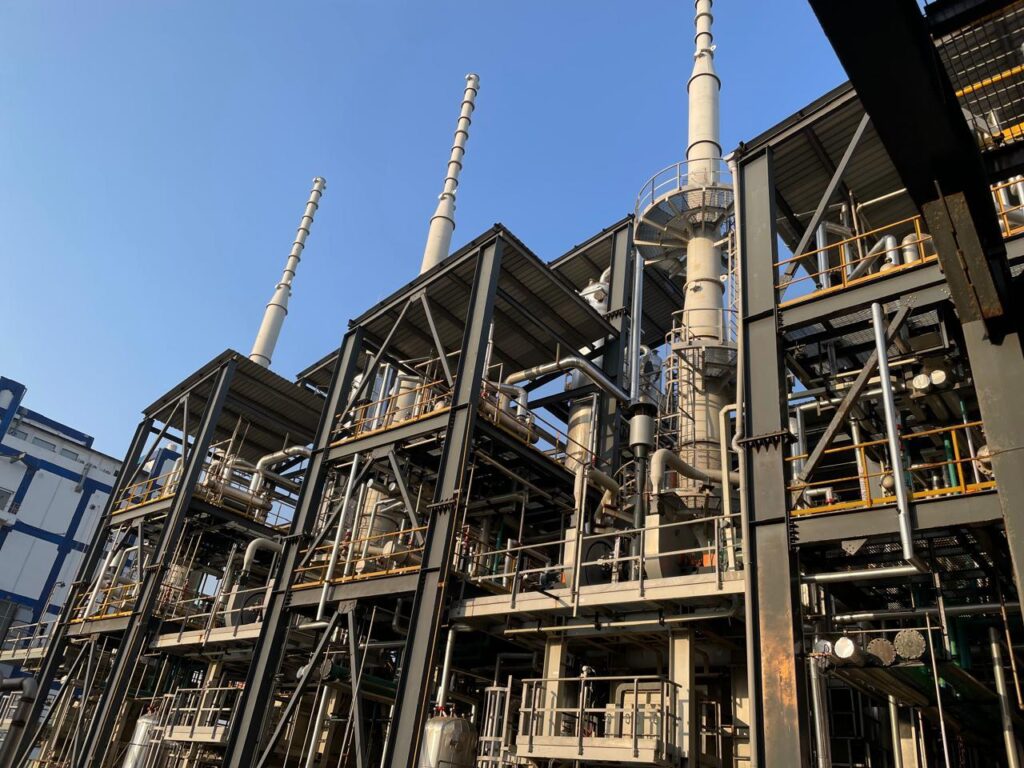
The photographs show equipment layout, access platforms, tank arrangements and connecting pipework. Project-specific materials, capacities, battery limits and testing requirements are defined in the agreed technical scope.
Explore the project gallery →