
Heavy Shell-and-Tube Heat Exchangers
ATTOMO manufactures shell-and-tube heat exchangers, condensers and reboilers for process-plant duties. Define both fluid streams, thermal and mechanical design responsibilities, materials, inspection and delivery requirements for a complete equipment quotation.
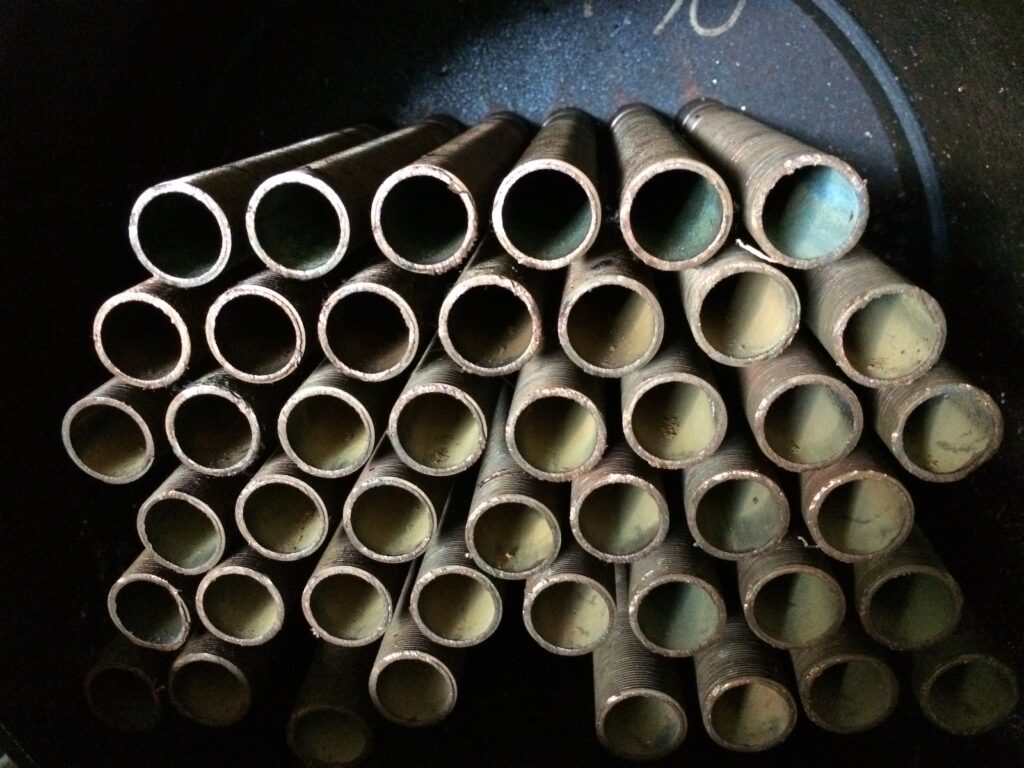

Process and equipment approach
One fluid flows through the tubes while another flows on the shell side. Thermal duty, pressure drop, fouling, materials and cleaning access determine the suitable arrangement. Mechanical design and inspection must follow the agreed project requirements.
Applications and product requirements
Shell-and-tube heat exchangers serve heating, cooling, condensation and reboiling duties across process plants. Two fluid streams exchange heat through tube walls without intended mixing. The service, fouling behaviour, pressure and cleaning requirements determine the mechanical arrangement.
Equipment and operating approach
Fixed-tubesheet, U-tube and removable-bundle arrangements offer different access and thermal-expansion characteristics. Tube-side and shell-side allocation considers pressure, corrosion, fouling and phase behaviour. Tube layout, baffles, velocities and pressure drop must be evaluated together; surface area alone does not establish an exchanger’s performance.
Simplified equipment illustration — not a fabrication drawing or project photograph.
Define the right package.
The quotation defines the included equipment, services and battery limits.
- Thermal and mechanical design as agreed
- Shell, tube bundle, heads and connections
- Supports and inspection provisions
- Testing and agreed documentation
Materials and configuration
ATTOMO’s scope can define thermal and mechanical design or fabrication to approved drawings, with specified shell, tube, tubesheet and gasket materials. Include corrosion allowances, joint details, nozzle loads, supports and inspection. Code compliance, third-party inspection and any required certification or stamp need explicit agreement and supporting credentials.
Utilities and operation
Provide fluid composition, flow range, inlet temperatures, target outlets or heat duty, operating and design pressures, fouling data and allowable pressure losses on both sides. Utility-side seasonal temperatures and cleaning access affect selection. Existing-unit replacement needs drawings and measured duty if the aim is to improve performance.
Information for your enquiry.
Share the information you already have. Early-stage enquiries are welcome.
| Topic | Information to provide |
|---|---|
| Thermal basis | Both fluid compositions, flow ranges, inlet temperatures, target outlets or heat duty, and allowable pressure drop. |
| Mechanical basis | Operating and design pressure/temperature on both sides, vacuum cases, nozzle loads and applicable code. |
| Component materials | Specify tubes, tubesheets, shell, channels, nozzles and gaskets separately; include corrosion and cleaning conditions. |
| Supply responsibility | State whether thermal design, mechanical design, fabrication to drawings, spare bundles or installation support is required. |
| Inspection and destination | Inspection stages, document list, third-party involvement, delivery country, packing and target schedule. |
Frequently asked questions
Which side should carry the corrosive or fouling fluid?
There is no universal rule. Materials, pressure, velocity, phase change and cleaning access must be reviewed together for both sides.
Can an exchanger be selected from heat-transfer area alone?
No. Area, temperature difference, heat-transfer coefficients, pressure drop and fouling interact. The full thermal duty and fluid properties are needed.
Is mechanical cleaning possible for every arrangement?
Access depends on the bundle, tube and head construction. Specify the cleaning method before selecting the design.
How should a condenser enquiry differ from a cooler enquiry?
Include vapour composition, condensation pressure, non-condensable gases, condensate conditions and venting requirements, in addition to the cooling utility data.