Acetic acid
recovery plants.
ATTOMO supplies acetic acid recovery plants and integrated recovery packages, with engineering, equipment, automation and commissioning responsibilities defined in the agreed turnkey scope. Start with representative feed analysis and the required recovered-acid specification.
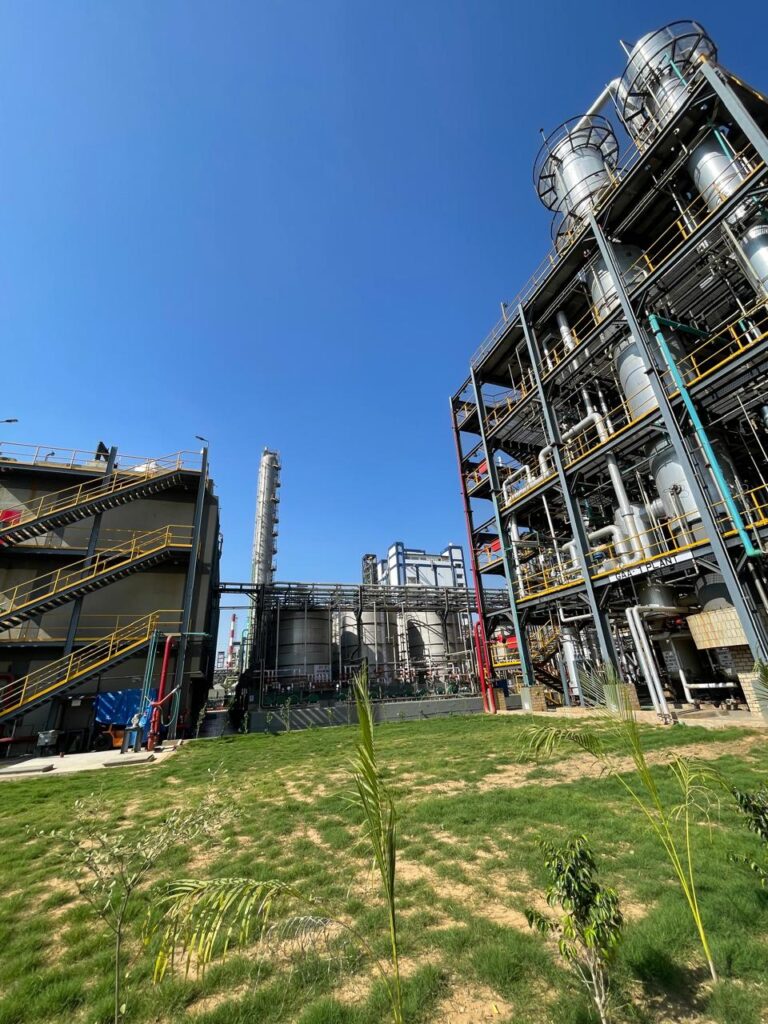
Plant and equipment enquiries: this page covers manufacturing plants and process packages, not the supply of bulk chemicals. Engineering is included within the agreed turnkey or equipment-supply scope. Explore Greenfield EPC delivery →
The feed determines
the separation route.
The separation route depends on acid concentration, water content and other dissolved or volatile components. Distillation, extraction or an integrated process may be evaluated where appropriate. Product purity, acid recovery, solvent losses and residual-stream treatment are separate design targets.
Recovery and purity measure different things. Recovery is the share of feed acid collected. Purity is its concentration in the recovered stream. Both need a clearly stated basis.
Applications and product requirements
Acid recovery is relevant where an existing process stream contains acetic acid that may be separated for reuse or sale. Feed strength alone is not enough: other organic acids, salts, suspended solids and volatile impurities can change the separation and corrosion requirements. Economic suitability depends on recovered-product value, utilities and residue management.
Equipment and operating approach
The process may combine distillation, extraction and solvent-recovery duties where justified by the separation study. A dilute aqueous stream can behave very differently from a concentrated acid stream. If extraction is selected, solvent choice, phase separation, solvent carryover and regeneration must all be addressed. A recovered-acid concentration target does not establish that the residual water or raffinate meets a discharge specification.
A defined equipment
and engineering package.
The proposal establishes the equipment, utilities, interfaces and responsibilities included in ATTOMO’s scope.
Engineering & process basis
Feed analysis, target specification and equipment duties.
Separation equipment
Columns, heat exchangers, condensers and receivers as selected.
Plant integration
Solvent-recovery and utility interfaces where the process requires them.
Controls & documentation
Instrumentation, automation, inspection and records within the agreed scope.
Materials and configuration
The equipment boundary can cover feed conditioning, columns, extraction or separation equipment where selected, condensers, reboilers, receivers, pumps and controls. Materials are reviewed for the full stream and concentration range. Brownfield integration requires existing tie-in conditions, available plot space and upstream variation, not only a target recovered-acid rate.
Utilities and operation
Provide heating and cooling conditions, water quality, electrical supply, annual operating schedule and disposal or reuse routes. Any recovery guarantee must specify how feed and product are sampled, how acid losses are counted and which operating cases apply. Solvent losses and condensate quality are separate acceptance measures where relevant.
What we need
from your process.
Share the information you already have. Early-stage enquiries are welcome.
- Representative feed analysis, including trace components
- Feed rate, temperature and operating pattern
- Required acid concentration and impurity limits
- Target recovery and residual-stream requirements
Frequently asked questions
What is the difference between recovery and purity?
Recovery is the proportion of feed acid collected in the recovered stream. Purity is the concentration of acid in that stream. A high value for one does not establish the other.
Can a recovery percentage be guaranteed from concentration alone?
No. The full feed composition, chosen route, operating conditions and sampling basis are needed. Any guarantee belongs in the agreed project specification.
What is included in turnkey supply?
The agreed scope matrix identifies engineering, equipment, civil works, utilities, installation, commissioning and statutory responsibilities. These should be confirmed in the proposal.
Why is a representative feed sample needed?
Minor components can affect equilibrium, corrosion, fouling and product quality. A complete analysis and operating variability support route selection and, where necessary, testing.
Can recovered acid be returned directly to production?
Only if it meets the receiving process specification. Water, other acids and residual solvent may restrict reuse even when the bulk acid concentration is acceptable.
Does acid recovery also treat all the wastewater?
No. The residual stream still needs a defined treatment or disposal route. Recovery performance and environmental treatment requirements must be assessed separately.
Related solutions
Acetic anhydride, acid recovery and tank-farm installation
A photographic overview of the process structures, equipment arrangement and storage area from ATTOMO’s project collection.
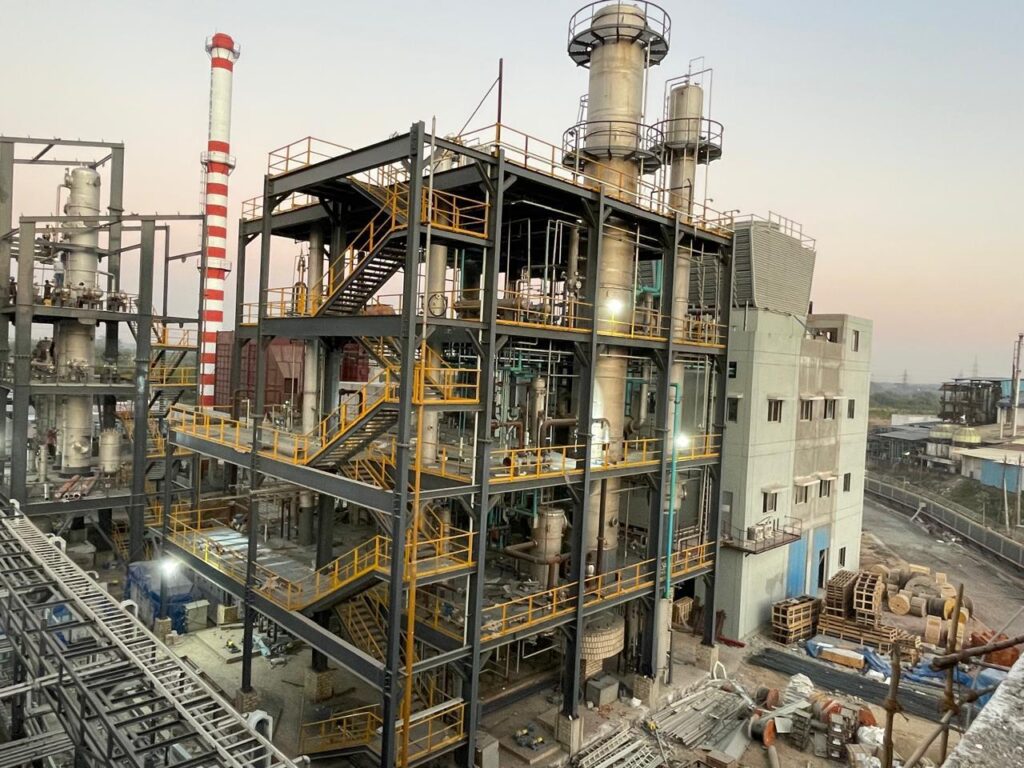
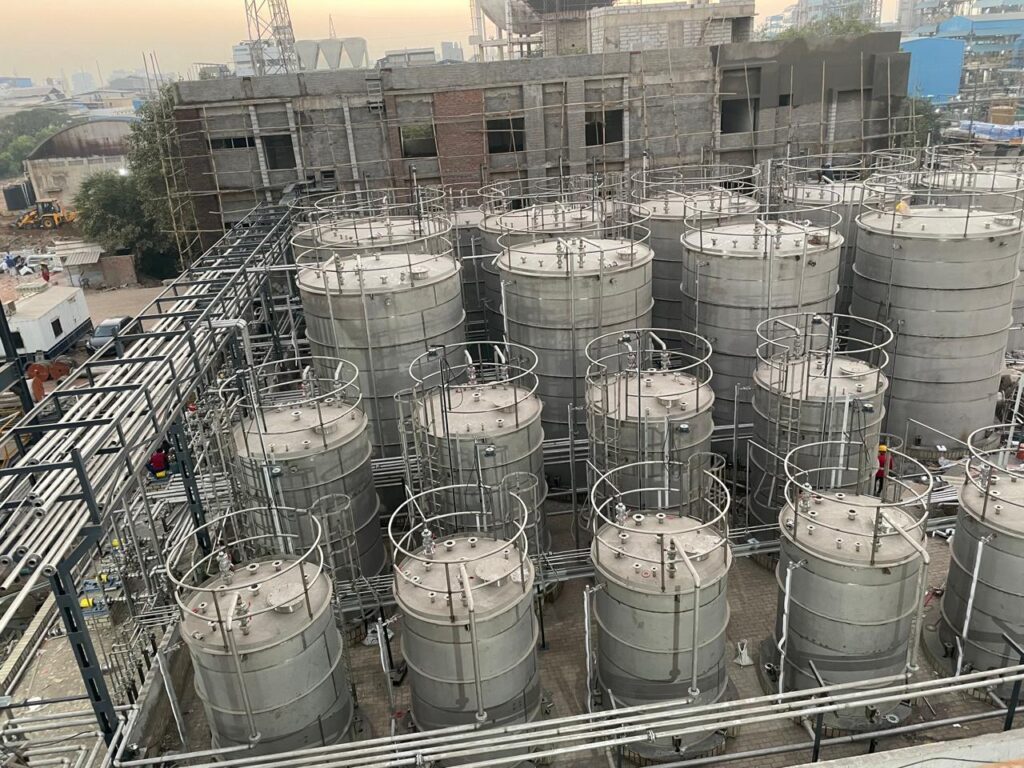
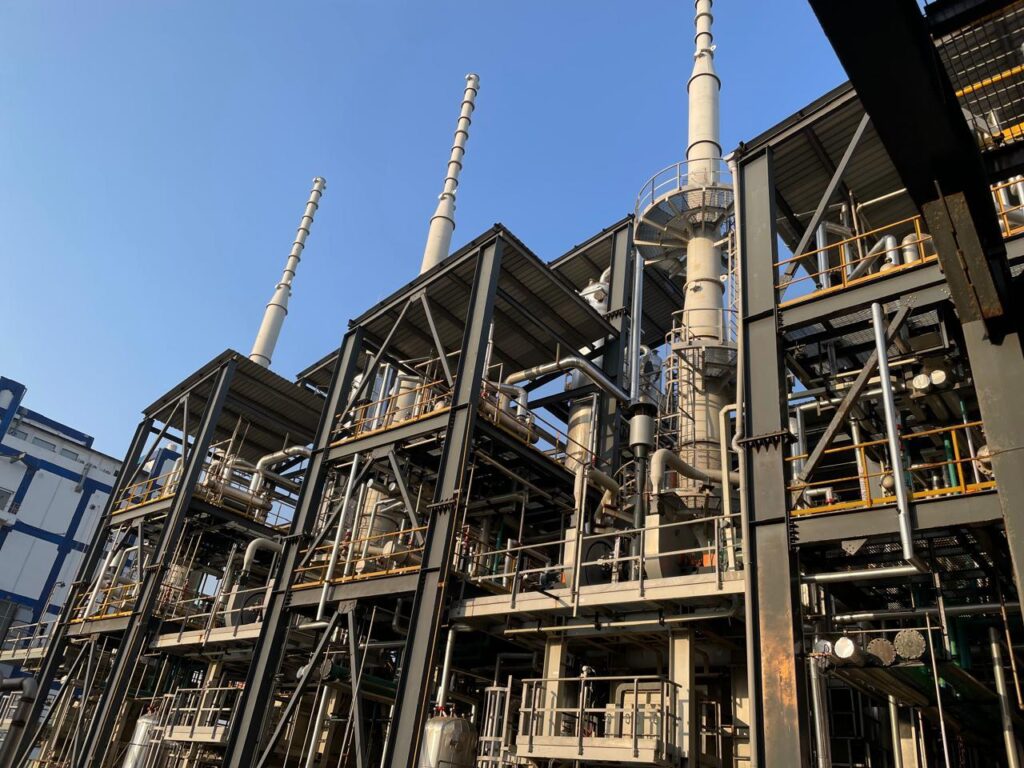
The photographs show equipment layout, access platforms, tank arrangements and connecting pipework. Project-specific materials, capacities, battery limits and testing requirements are defined in the agreed technical scope.
Explore the project gallery →